Couch removal FAQs explain what affects the job, how pickup works, and what happens next. Couch size, access, labor, urgency, and disposal needs all matter. Donation may be possible when a couch is clean and usable. A removal team can also handle heavy, damaged, or unwanted furniture in Littleton.
Table of Contents

- How much does couch removal cost?
- What types of couches can be removed?
- How does professional couch pickup work?
- How quickly can a couch be picked up?
- Can an old couch be donated?
- How are unwanted couches disposed of?
- Can a couch be removed from an apartment or office?
- Can a couch be removed if it will not fit through the door?
- What should you do with a couch before removal?
- What should you look for in a couch removal service?
- Frequently Asked Questions
- Key Takeaways
- Conclusion
How much does couch removal cost?
Couch removal costs depend on the work needed, not only the couch. A small sofa on the ground floor is often easier than a large sectional upstairs. Size, weight, stairs, travel to the truck, labor, and disposal needs all affect the final quote.
A provider should review the couch and access details before confirming the final cost. Clear information helps prevent delays and confusion. Photos can also help a removal company understand the job before setting a time.
What factors affect the cost of removing a couch?
The main factors include the couch type, its condition, and the path out. A sleeper sofa may weigh more than a standard sofa because of its metal frame. A sectional may need more handling because it has several parts. Wet, torn, or badly soiled furniture may need special disposal planning.
Access matters too. Long halls, stairs, elevators, narrow doors, and crowded rooms can add work. The distance from the couch to the truck may also matter. Urgent scheduling can change how the job is planned. The final cost is confirmed on a quote after the provider reviews the details.
How does couch removal compare with other bulky furniture jobs?
A couch may need work similar to a mattress, dresser, or large table. A small loveseat may be easier to move than a full sectional. A heavy wood dresser may take more effort than a light sofa. The right comparison depends on size, weight, access, and disposal needs.
Littleton Junk Removal helps Littleton property owners understand which details matter before pickup. This makes it easier to compare couch removal with other furniture removal work without judging the job by the item name alone.
What types of couches can be removed?
Most removal providers handle common home and business seating. This may include sofas, loveseats, sectionals, futons, recliners, sleeper sofas, and other large upholstered furniture. The provider should know the couch type before arrival so the crew can plan safe handling.
A couch does not need to be in perfect shape for removal. Many people need help with furniture that is broken, stained, old, or too large for regular trash service. The crew can explain whether the item may be donated, recycled, or sent for disposal.
Can sofas, loveseats, sectionals, and sleeper couches be picked up?
Yes, these furniture types can often be picked up through couch removal service. Sectionals may be split into smaller parts before moving. Sleeper sofas may need extra care because their frames and bed parts can be heavy. Recliners also need care near walls and door frames.
Describe the couch clearly when arranging service. Helpful details include the number of pieces, size, material, and location. A photo may help when the couch is very large or sits in a hard-to-reach place.
Are oversized or damaged couches accepted?
Many companies accept oversized and damaged couches, but the crew needs to know first. A couch with broken legs may shift during the move. A soaked couch may be unsafe to carry through a home. Badly damaged furniture may also have fewer donation or recycling choices.
Mention stains, water damage, pests, sharp parts, or weak frames. Honest details help protect the crew and the property. They also help the provider choose the right removal and disposal plan.
How does professional couch pickup work?
Professional couch pickup usually starts with a review of the item and its location. The crew then protects the path, moves the couch, loads it, and leaves the area clear. Each provider may work a little differently, but good planning cuts down on damage and wasted time.
The owner usually does not need to carry the couch outside. That is one reason people use a full-service junk removal company for large furniture. The crew handles the heavy lifting while the owner provides access and clear instructions.
What should you do before the removal crew arrives?
Clear blankets, cushions, toys, clothing, and items from under the couch. Open the walkways as much as possible. Move breakable decorations away from the route. Tell the crew about locked gates, parking limits, or building check-in rules.
A short preparation list can help:
- Remove personal items from the couch and nearby floor.
- Clear a safe path from the furniture to the exit.
- Keep pets in a separate room during the visit.
- Move fragile items away from corners and halls.
- Share stairs, elevators, gates, and parking details early.
How are couches moved safely out of a property?
Crews may use lifting straps, furniture blankets, dollies, and careful hand positions. They may tilt, turn, or separate a couch when the route calls for it. The crew should protect walls, floors, doors, and railings during the move.
Safe removal depends on teamwork. One person may guide the route while others support the couch. Rushing can cause property damage or injury. Homeowners should not help lift a heavy couch unless the crew asks them to do so safely.
How quickly can a couch be picked up?
Pickup timing depends on the provider’s schedule, the location, the couch details, and the access plan. Some jobs can be arranged quickly, while others need more planning. A time cannot be promised until the company checks its schedule and the job needs.
Local service may reduce travel time, but it does not guarantee same-day pickup. Busy periods, bad weather, building rules, and large furniture loads can affect timing. Clear details usually make it easier to find a suitable appointment in Littleton.
What affects couch removal scheduling?
The main factors are crew availability, travel distance, item size, and property access. A couch in a ground-level home may be easier to schedule than a sectional inside a managed building. Elevator bookings and loading rules may also limit open time slots.
Share the preferred timing and any deadline. A move-out date, office change, or property turnover may need careful planning. Early contact gives the provider more room to match the job with an open schedule.
Can furniture be removed during an office or home move?
Yes, couch removal can often be planned during a move. Removing unwanted furniture before movers arrive can clear space and reduce confusion. In an office, removing old lounge furniture can make room for new equipment or a new layout.
Coordinate the removal with movers, building staff, and other workers. Identify the couch clearly so the wrong item is not taken. A separate access plan can keep the removal from blocking the moving crew.
Can an old couch be donated?
An old couch may be donated when it is clean, safe, complete, and usable. Donation centers set their own rules, so acceptance is not automatic. Many groups will not take furniture with deep stains, tears, odors, pests, or serious damage.
Check donation rules before arranging transport. A removal company may help judge whether an item appears fit for reuse, but the donation center makes the final choice. Photos and honest condition details can save time.
What condition does a couch need to be in for donation?
A donation-ready couch should be clean, dry, stable, and free from serious damage. Cushions should be present when they belong to the original design. The frame should support normal use, and the fabric should not have strong odors or pest signs.
A couch can be old and still be useful if it is sturdy. A couch with small wear marks may be accepted in some areas. Do not hide damage or contamination. Donation groups need safe items that can go to another household.
What should you do if donation centers cannot accept it?
If donation is not possible, the couch may have other responsible options. Some materials may be recovered, and some furniture may go to a local transfer station or disposal site. The right choice depends on the couch, its condition, and local rules.
A removal provider can explain the next step before pickup. This is often easier than leaving the couch beside a home or office dumpster. Regular trash service may not accept large upholstered furniture, and illegal dumping can create safety and environmental problems.
How are unwanted couches disposed of?
Unwanted couches may be donated, reused, taken apart, recycled in part, or sent to an approved disposal site. The best choice depends on the couch condition and local facilities. Responsible removal means choosing a suitable path instead of treating every couch the same.
Couches contain many materials. These may include fabric, foam, wood, metal springs, plastic parts, and fasteners. Separating materials can help recovery, but not every facility accepts every part.
What happens to a couch after pickup?
After pickup, the couch goes to a place chosen by the provider’s disposal plan. Reusable items may go to donation or resale partners. Damaged furniture may be taken apart or delivered to a facility that accepts bulky waste.
Ask how the company handles donation and disposal. A responsible provider should explain the process clearly. It should not claim that every item is recycled when the material or condition makes that unlikely.
Which couch materials may be reused or recycled?
Metal springs and some wood parts may have recovery value. Clean cushions or fabric may sometimes be reused. Foam and mixed upholstery are harder to process because they contain several materials and may be dirty.
Recycling depends on local facility rules. Do not take apart a couch at home unless you can do it safely. Sharp springs, staples, and heavy frames can cause injury. Professional handling is often safer for large or damaged furniture.
Can a couch be removed from an apartment or office?
Yes, a couch can often be removed from an apartment, office, condo, or other managed property. The owner must share access details and follow building rules. Some properties require approval, a service elevator, a loading window, or proof of insurance.
The building manager may need to reserve an elevator or protect shared areas. A removal crew may also need parking close to the entrance. Planning these details early helps prevent a failed visit.
What access details should be shared before pickup?
Tell the provider the floor, entrance, elevator location, stair count, hall layout, and parking conditions. Mention locked doors, security desks, loading docks, gates, and time limits. These details affect how the crew prepares.
It also helps to explain whether the couch is in a private room, shared lounge, office suite, or storage area. A photo of the item and entry path may answer questions faster than a long description. Accurate information supports safer planning.
How can building rules affect furniture removal?
Building rules may control when large items can leave the property. Some managers require a service elevator reservation. Others limit truck access or require removal during certain hours. A building may also require protection for floors and walls.
The tenant or owner must check those rules. The removal company can follow the instructions, but it may not be able to get property approval. Share the building contact and approval details before pickup to prevent delays.
Can a couch be removed if it will not fit through the door?
A couch may still be removable when it does not fit through the main door. The crew can check other paths, remove legs, separate sections, or carefully turn the frame. In some cases, the couch must be taken apart, but that depends on its design and condition.
The crew should never force a couch through a doorway. Pressure can damage walls, doors, trim, floors, or the couch. A professional review is safer than guessing.
When might a couch need to be disassembled?
Disassembly may help when the couch has removable legs, arms, backs, or sectional connectors. Sleeper sofas and recliners may have moving parts that need care. Some frames are made as one solid piece and cannot be separated without damage.
Do not cut or break the couch before pickup. Hidden springs, staples, screws, and metal parts can cause harm. A trained crew can decide whether careful disassembly is practical and how to handle the pieces afterward.
How do stairs, narrow halls, and elevators affect removal?
Stairs and narrow halls make the route more complex. The crew may need extra room to turn the couch or protect walls. An elevator may have a weight limit or need a reservation. Long carries can also affect the time and labor needed.
Measure tight doorways when possible and share the details early. Remove loose rugs and nearby objects as well. A clear route gives the crew more control and lowers the chance of damage.
What should you do with a couch before removal?
Before removal, empty the couch and clear the area around it. Remove cushions, blankets, toys, remote controls, and items stored underneath. Check hidden spaces so personal belongings are not left behind.
Preparation is simple, but it makes pickup safer. A clear room helps the crew inspect the couch and choose the best route. It also protects children, pets, and fragile household items.
Which items should be removed from inside and around the couch?
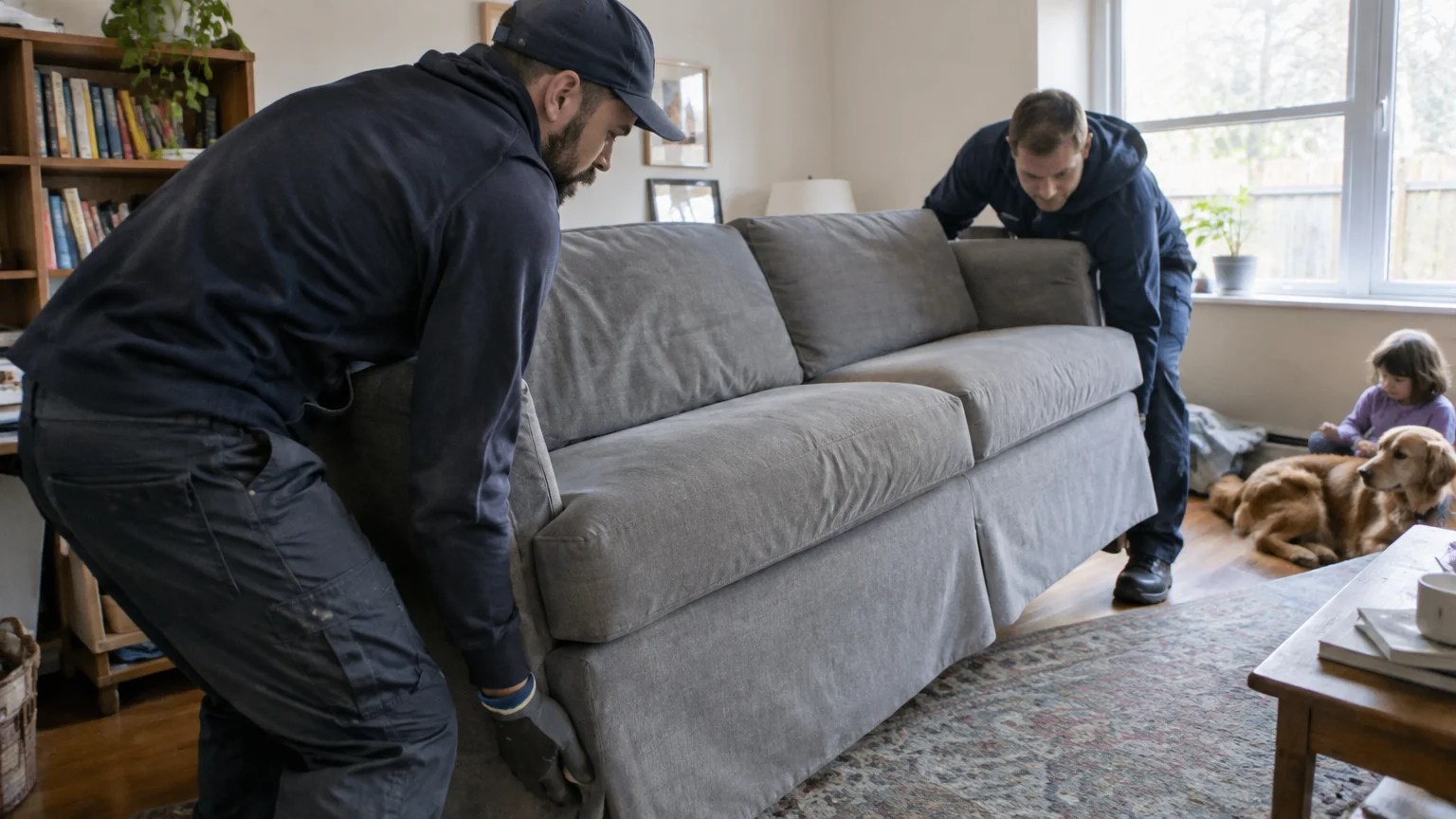
Remove all personal items from cushions, storage areas, and the nearby floor. Books, chargers, small electronics, coins, pet toys, and clothing can be easy to miss. Move artwork, lamps, tables, and decorations near the route as well.
Food, liquids, and sharp objects should not stay inside the couch. These items can spill or cause injury during lifting. If the couch has a built-in bed, check the frame and storage space before pickup.
How can you prepare pets, children, and walkways for pickup?
Keep pets and young children away from the work area. A separate room with a closed door is usually safest. Walkways should be free of clutter, wet spots, loose cords, and small objects that could cause a trip.
Outdoor routes need attention too. Unlock gates when appropriate, clear snow or leaves, and keep vehicles away from the loading area. These small steps help the crew work carefully and keep the home calm.
What should you look for in a couch removal service?
A good couch removal service should explain its process, confirm item details, and use safe handling steps. It should also give clear information about access, timing, donation, recycling, and disposal. The company should say when an item needs special handling.
Littleton Junk Removal serves property owners who need practical furniture removal help and nearby areas. A local provider may know common apartment, office, and home access concerns. Each job still needs a clear review.
Which questions help you compare removal providers?
Useful questions focus on the work, not only company claims. Owners can ask:
- Does the service remove sofas, sectionals, sleeper couches, and recliners?
- Can the crew handle stairs, elevators, narrow halls, or gated properties?
- What should the owner prepare before the crew arrives?
- How are usable and damaged couches handled after pickup?
- When is the final cost confirmed on a quote?
- Are building rules or loading instructions needed before scheduling?
The answers should be direct and easy to understand. A provider that avoids basic questions may not be the right fit. Written job details can help both sides agree on the work.
Why do responsible disposal practices matter?
Responsible disposal keeps large furniture out of unsafe places. It can also give usable items another purpose and help recover materials when local facilities allow it. Dumping a couch beside a road, vacant lot, or full dumpster can create hazards and lead to local penalties.
The right provider should match the couch with a realistic next step. Donation works when the item is safe and usable. Recycling may help with some materials. Disposal is sometimes needed for wet, contaminated, or badly damaged furniture.
Frequently Asked Questions
Can a couch be placed beside the curb for regular trash pickup?
It depends on local collection rules. Many regular trash programs do not accept large upholstered furniture, or they require advance arrangements. Leaving a couch at the curb without approval can create a violation or block walkways. Check the local program or arrange bulky item removal through a qualified provider.
How do people get rid of a couch that is still usable?
A clean, stable couch may be donated, sold, given away, or passed to a reuse group. Describe its condition honestly and confirm that the recipient can accept it. If no reuse option is available, a removal company can explain disposal choices.
Can a junk removal company take a couch and a mattress together?
Many providers handle both items during one visit, but tell them about each item before scheduling. Mattresses may have different donation, recycling, or disposal rules than couches. Sharing the full list helps the crew plan space, labor, and next steps.
Is it safe for a homeowner to move a couch alone?
Most large couches are awkward and heavy, so moving one alone can cause injury or damage. A homeowner can clear the room and remove small items, but heavy lifting is usually better left to a trained crew. This is especially true for sleeper sofas, sectionals, stairs, and tight doors.
What are couch removal FAQs most useful for?
Couch removal FAQs help owners understand the process before scheduling service. They cover item types, access, timing, donation, disposal, and preparation. They also show what details a provider needs to confirm the job. Clear answers help owners choose a safe and useful option.
Key Takeaways
- Couch removal costs depend on the work involved, including size, weight, access, labor, and disposal needs.
- Most sofas, loveseats, sectionals, sleeper couches, and recliners can be reviewed for pickup.
- Donation is possible only when a couch is clean, safe, dry, and usable.
- Apartment and office removal may require elevator reservations, loading rules, or building approval.
- Owners should clear the couch, protect the route, and share access details before pickup.
Conclusion
Couch removal is easier when the owner shares accurate details from the start. The couch type, condition, location, access route, and preferred timing all help shape the plan. Donation may work for clean furniture, while damaged items may need recycling or approved disposal.
Littleton Junk Removal can help homeowners, landlords, office managers, and business owners review options for unwanted couches. Contact us to arrange a couch pickup and discuss the right next step for the property.