Drywall removal FAQs explain what debris can be hauled away, how to limit dust, and what may affect timing. Drywall and plaster cleanup can include loose scraps, damaged boards, and other renovation waste. The right plan depends on the materials, access, local disposal rules, and nearby work.
A remodel can leave piles of broken board, plaster, and dusty scraps. These materials can slow down the next step if they stay in the way. A clear cleanup plan helps homeowners, contractors, and property managers keep work areas safer and easier to use.
Table of Contents
- What does drywall removal include?
- How much does drywall removal cost?
- How should drywall be disposed of?
- How can dust be controlled during drywall removal?
- How long does drywall removal and hauling take?
- Can drywall removal be handled as a DIY project?
- How should you prepare a site for drywall removal?
- Frequently Asked Questions
- Key takeaways
- Conclusion
What does drywall removal include?
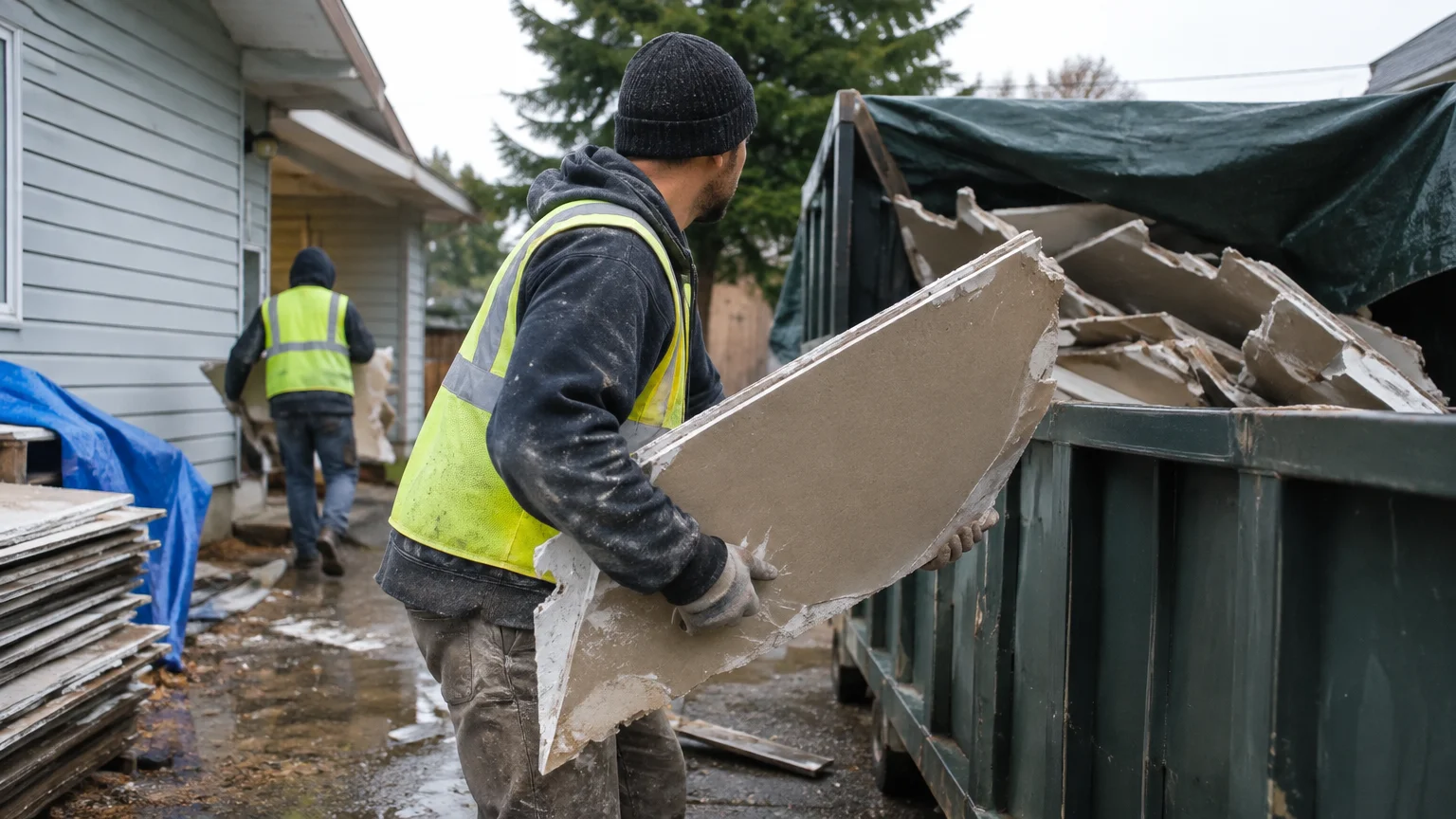
Drywall removal usually means taking away unwanted wallboard, plaster, and related tear-out debris. The job may also include gathering loose scraps and loading them for disposal. Before work starts, agree on which items will go and which should stay.
Which materials and debris are typically removed?
A cleanup may include drywall sheets, broken board pieces, plaster, and small amounts of wood or trim. Some jobs also have insulation, metal corner bead, screws, or packaging. These materials can need different handling, so sort them when possible.
Drywall is a wall or ceiling panel with a gypsum center and paper sides. Plaster is another wall material, often found in older buildings. The two can look alike when broken, but may differ in weight and disposal options. Tell the crew what materials are there instead of calling everything drywall.
Construction debris removal may also include other renovation waste, like wood scraps or concrete pieces. Appliances, furniture, and household trash are separate items to discuss before pickup. A full-service junk removal company may take mixed loads, but accepted items vary by provider and local rules.
What should be clarified before work begins?
Confirm which rooms, piles, or items are part of the cleanup. Point out anything that must stay, such as fixtures, doors, or stored tools. Tell the crew if debris is indoors, outside, upstairs, or behind a locked gate. These details help the team plan access and avoid mix-ups.
Littleton Junk Removal can help property owners and contractors discuss drywall and renovation debris before cleanup. Explain whether the material is bagged, loose, or still attached to a wall. If the remodel also includes furniture or appliances, name those items separately so the plan covers the whole job.
How much does drywall removal cost?
Drywall removal cost depends on how much material needs hauling, where it is, and how easy it is to reach. Mixed debris, tight access, heavy plaster, and urgent timing may change the work involved. The final cost is confirmed on a quote after the job details are reviewed.
What factors affect the overall cost?
The size of the debris pile is one part of the quote. A small stack of loose board is different from a large tear-out across several rooms. Stairs, narrow halls, long carry distances, parking, and whether the debris is already gathered can also affect the work.
Material type matters as well. Drywall is often easier to move than dense concrete, while plaster can be heavy and break into small pieces. Mixed renovation waste may take more sorting than a load of one material. Tell the removal team what is in the pile before the quote is confirmed.
Timing and site conditions can shape the plan, too. A pickup during an active remodel may need to fit around other trades or building rules. Share deadlines, work hours, and loading limits. This gives the team a clearer picture of the job.
How does drywall hauling compare with other renovation debris?
Drywall hauling can be simpler than removing heavy concrete or large, awkward items. But a big pile of broken board can take up a lot of space. Concrete weighs more, while wood scraps may stack more easily. The mix of debris and access matter more than the material name alone.
A fridge or other appliance needs a different plan from drywall. Owners wondering how to dispose of appliances should check local rules and ask whether the hauler accepts them. The same is true for old or broken furniture. Share each item so the quote reflects the full load.
Do not compare providers using only a short description of the job. Give each one the same details about materials, pile size, access, and timing. This can make each quote easier to understand and help avoid changes due to missing details.
How should drywall be disposed of?
Drywall should go to a disposal or recycling site that accepts its material and condition. Local rules, site policies, and possible contamination can affect where it belongs. Keep drywall apart from other debris when practical, and check the rules before drop-off or hauling.
Can drywall be recycled or reused?
Some clean drywall may be accepted for recycling or reuse, depending on local options and its condition. Wet, painted, moldy, or mixed pieces may not qualify. Do not assume recycling is available. Ask the receiving site or a local removal provider first.
Reuse works best when sheets are whole, dry, and not damaged. Broken pieces from a tear-out are less likely to suit another project. Keep usable material apart from rubble and scraps so it stays in good shape. A contractor may know if a clean piece can be used again on site.
Disposal rules can differ across the Littleton area, from Downtown Littleton and Ken Caryl to Englewood, Centennial, Highlands Ranch, Sheridan, and nearby communities. Transfer stations, recycling sites, and landfills may accept different materials and have their own sorting rules. Ask before loading a vehicle, especially when the pile includes plaster, insulation, or other renovation waste.
Why do disposal rules depend on the material and location?
Each site decides what it can accept based on its permits, tools, and handling process. Drywall mixed with other waste may be treated differently from a clean, separate load. Local rules may also depend on the type and condition of the debris.
Older buildings can have materials that need special care. If you are unsure what a wall contains, pause before breaking or moving it. Do not treat unknown material as regular drywall. Ask a qualified professional to check it before work continues.
For renovation cleanup, Littleton Junk Removal can explain what details to share when planning a haul. The property owner should still check any site rules that apply to the waste. Sorting materials and sharing clear details can help keep debris on the right disposal path.
How can dust be controlled during drywall removal?
Dust can be limited by closing off the work area, covering nearby surfaces, and containing debris as it is removed. Dust control works best when planned before demolition starts. The right steps depend on the room, removal method, and nearby spaces in use.
What preparation helps limit dust indoors?
Move furniture, rugs, and personal items out of the room when possible. Cover items that must stay, and protect floors and doorways. Close doors to other rooms and keep vents from carrying dust through the home. Follow building and product guidance when covering vents or using equipment.
Keep children and pets away from the work area. Set a clear path for carrying debris, and avoid tracking dust through clean rooms. Gather loose scraps in a suitable bag or container as work continues. Dry sweeping can send fine dust into the air, so use a cleanup method suited to the material.
Dust can spread beyond the room being repaired. Tell nearby occupants when work is planned, especially in shared homes or business spaces. Property managers should check building rules for work hours, hallway protection, and moving waste.
When might professional containment be appropriate?
Containment may help when work is near occupied rooms, shared halls, or sensitive equipment. It can also help with a large tear-out that creates many loose pieces. A qualified contractor can assess the area and choose suitable controls for the removal work.
A hauling crew usually gathers and removes debris. It may not handle every part of demolition or indoor dust control. Confirm who will remove wall material, contain dust, and clean the room. Clear roles help the renovation crew and hauling service avoid gaps.
If the building has unknown or damaged materials, stop and get qualified advice before disturbing them. A basic dust mask or household cleanup is not a replacement for an expert check. Safety matters more than speed or convenience.
How long does drywall removal and hauling take?
The time needed depends on the amount of debris, how it is set out, and how easily workers can reach it. A small, ready pile is usually simpler to collect than debris spread across several rooms. Demolition and hauling are separate parts of the project.
What affects the project timeline?
The amount and condition of the material affect how it can be handled. Bagged scraps may be easier to carry than loose pieces scattered across a floor. Stairs, elevators, narrow doors, long walks, and limited parking can slow loading. Share these details when setting up the work.
Other trades can affect the schedule as well. Electricians, plumbers, painters, and installers may need the same rooms. Building rules, loading times, and site safety steps can affect when debris can leave. Share known deadlines and work hours early.
Weather may matter when debris is stored outside or the loading route is exposed. Keep material protected and easy to reach while following the site’s safety plan. The removal provider can confirm a useful arrival window after reviewing the job details.
How can removal be coordinated with renovation work?
Plan cleanup when demolition debris is ready to go, but before new work needs a clear space. Ask the contractor which materials will be removed and whether any pieces must stay for a check or reuse. This helps the hauling plan fit the remodel.
For work in stages, decide whether debris should go in one visit or several loads. One cleanup may suit a finished tear-out, while ongoing work can make new piles later. The choice depends on access, storage space, and the pace of the project.
Keep the loading route clear and tell the crews who can approve changes on site. If the pile grows or includes new materials, update the removal provider before pickup. Clear updates can help contractors and property owners avoid delays.
Can drywall removal be handled as a DIY project?
A homeowner may handle small, simple cleanup when the material is known, the area is safe, and local rules allow it. You do not need a professional for every loose scrap or basic tidy-up. Large tear-outs, heavy loads, hard access, and unknown materials need more care.
What safety concerns should property owners consider?
Wear work gloves and eye protection when handling sharp, broken board. Keep children and pets away, and do not lift a load that feels too heavy. Use a clear path and steady containers. Do not break material near wires, pipes, or fixtures unless a qualified person has checked the area.
Do not disturb material if you are unsure what it is. Older walls may have layers or products that are not safe to handle without an expert check. Stop if material looks unusual, has a strong smell, or causes concern. Ask a qualified professional what to do next.
DIY hauling also means checking vehicle capacity, securing the load, and confirming local disposal rules. Do not overload a vehicle or leave debris loose during a drive. A disposal site may refuse mixed or poorly prepared waste, so check its rules first.
When is professional debris removal a better fit?
Professional removal can help when debris is bulky, spread across a property, or hard to carry safely. It may also help contractors who need a clear work area without moving workers away from other tasks. Ask what the crew will collect and what remains your responsibility.
A removal team may take mixed renovation waste, but the provider should confirm accepted items. Ask about old furniture separately from drywall, including needs covered by professional furniture removal. These items may need different handling and may not go with construction debris.
People searching for junk removal near me often need local help with a specific pile. Compare providers by explaining the material, access, and timing. Choose a service that clearly says what it can take and how pickup will work.
How should you prepare a site for drywall removal?
Prepare the site by clearing access, protecting items that stay, and sharing clear details about the debris. An open path can help the removal team work with fewer stops. Good preparation also helps the owner and contractor agree on the cleanup.
What should be cleared or protected beforehand?
Move tools, furniture, vehicles, and stored items away from the debris and loading path. Protect floors and nearby surfaces if demolition or carrying is still underway. Mark items that must stay, and keep pets and other occupants away from active work areas.
Make sure gates, doors, and shared entrances are ready at the planned time. In a business building, tell the property manager or site lead about the collection. Check rules for elevators, loading areas, or work hours before the crew arrives.
Do not block exits, fire equipment, or paths needed by other trades. If the pile is outside, keep it in a safe place that workers can reach. Protect it from weather when practical. These steps help the cleanup without asking the owner to lift unsafe loads.
What details help plan a smooth cleanup?
Share the material type, pile size, location, and access limits. Explain whether drywall is loose, bagged, or mixed with plaster, wood, insulation, or other waste. Photos may help a provider understand the job, but confirm the details directly, too.
Mention stairs, long carry distances, parking limits, and building rules. Tell the provider if a contractor will be there and who can answer questions. If the job includes household trash or other items, list them apart from renovation waste.
Frequently Asked Questions
Can drywall be put in regular household trash?
That depends on local rules and the waste service. Some areas limit construction debris in household bins, and large pieces may not fit or be accepted. Check with the local waste provider before disposal. Keep drywall separate until you know which option accepts it.
Can wet drywall be recycled?
Wet drywall may not be accepted for recycling because its condition can affect handling. Keep it apart from clean, dry pieces and ask the receiving site what it takes. If it is moldy or has an unknown coating, get qualified advice before moving or sorting it.
How can someone get rid of old furniture during a remodel?
First, check whether the furniture can be donated or reused. For damaged items, ask a local waste provider or removal service what it accepts. Describe large or broken pieces apart from drywall, since they may need a different loading and disposal plan.
How should someone dispose of concrete chunks?
Concrete is heavy, so keep pieces in a safe, steady place and do not lift more than feels comfortable. Check local disposal options or ask a removal provider whether it accepts concrete. Keep it apart from drywall and light debris so the load can be planned well.
What should someone ask before booking drywall hauling?
Ask what materials the provider takes, what details it needs, and how access or mixed debris affects the plan. Explain the amount, location, and timing clearly. Confirm the final cost on a quote before work starts, and make sure everyone agrees on what will be removed.
Key takeaways
- Agree on which materials are included before removal begins.
- Keep drywall separate when disposal or recycling rules are unclear.
- Plan dust control before demolition starts.
- Share access, timing, and material details when asking for a quote.
- Handle small, safe cleanup tasks yourself, but seek help for heavy or unknown materials.
Conclusion
A clear plan makes drywall cleanup easier to fit into a renovation. Material type, access, dust control, and local disposal options all matter. Littleton Junk Removal can help explain what details are needed to plan a debris collection.
Contact us to discuss your drywall debris and plan the next step.