How to dispose of refrigerators responsibly means keeping the unit out of regular trash until its refrigerant is recovered safely. Empty and unplug the refrigerator, protect floors and doors, and check local rules before moving it. Littleton property owners can also ask Littleton Junk Removal about safe pickup and responsible appliance handling.
Table of Contents
- Why must refrigerators be disposed of responsibly?
- What is Freon, and why does refrigerator disposal involve it?
- Can you put a refrigerator out for regular trash pickup?
- How should you prepare a refrigerator for removal?
- What are the most responsible ways to dispose of an old refrigerator?
- How are refrigerators handled by a professional removal service?
- How much does responsible refrigerator disposal cost?
- Frequently Asked Questions
Why must refrigerators be disposed of responsibly?
An old refrigerator contains more than metal and plastic. It may hold refrigerant, oil, insulation, glass, and electrical parts. Each material needs a different type of handling. Careful disposal helps keep harmful materials out of the air, soil, and water.
What environmental risks can an old refrigerator create?
An abandoned refrigerator can release chemicals if it is damaged, cut, or crushed too soon. Its foam insulation may also need controlled processing. Broken glass and sharp metal can hurt workers, children, and animals. A refrigerator left outside can collect water and become a safety risk.
Responsible disposal keeps the unit in a proper recycling or recovery stream. A qualified worker can remove the refrigerant before the appliance is processed. Metal can then be separated from plastic, wiring, foam, and other parts. This lets useful materials enter the recycling process instead of going straight to waste.
Which refrigerator parts need special handling?
The sealed cooling system needs the most care. It may contain refrigerant and compressor oil. The compressor, coils, tubes, and insulation also need attention during recycling. Newer units may use a refrigerant other than the older product often called Freon, so check the appliance label.
Homeowners should not puncture coils or remove the compressor. They should not cut power cords or open sealed parts without proper training. Rules in Littleton may differ by waste provider and local facility. Littleton Junk Removal can help explain the next safe step before the refrigerator leaves the property.
What is Freon, and why does refrigerator disposal involve it?
Freon is a common name for some refrigerants used in cooling equipment. Refrigerant is the fluid that moves heat from inside a refrigerator to the outside. It must be recovered before the appliance is crushed, taken apart, or recycled. The type used depends on the refrigerator's age and model.
How do refrigerants affect the environment?
Some older refrigerants can harm the ozone layer when released. Other refrigerants can add to climate problems when they escape. For this reason, never drill, smash, burn, or take apart a refrigerator at home. A unit that no longer cools may still contain refrigerant and compressor oil.
A product label can show the refrigerant type. Look inside the fresh-food area, near the compressor, or on the back. The owner manual may also list it. If the label is missing, treat the appliance as if it contains refrigerant until a qualified worker checks it.
Who can recover refrigerant from a refrigerator?
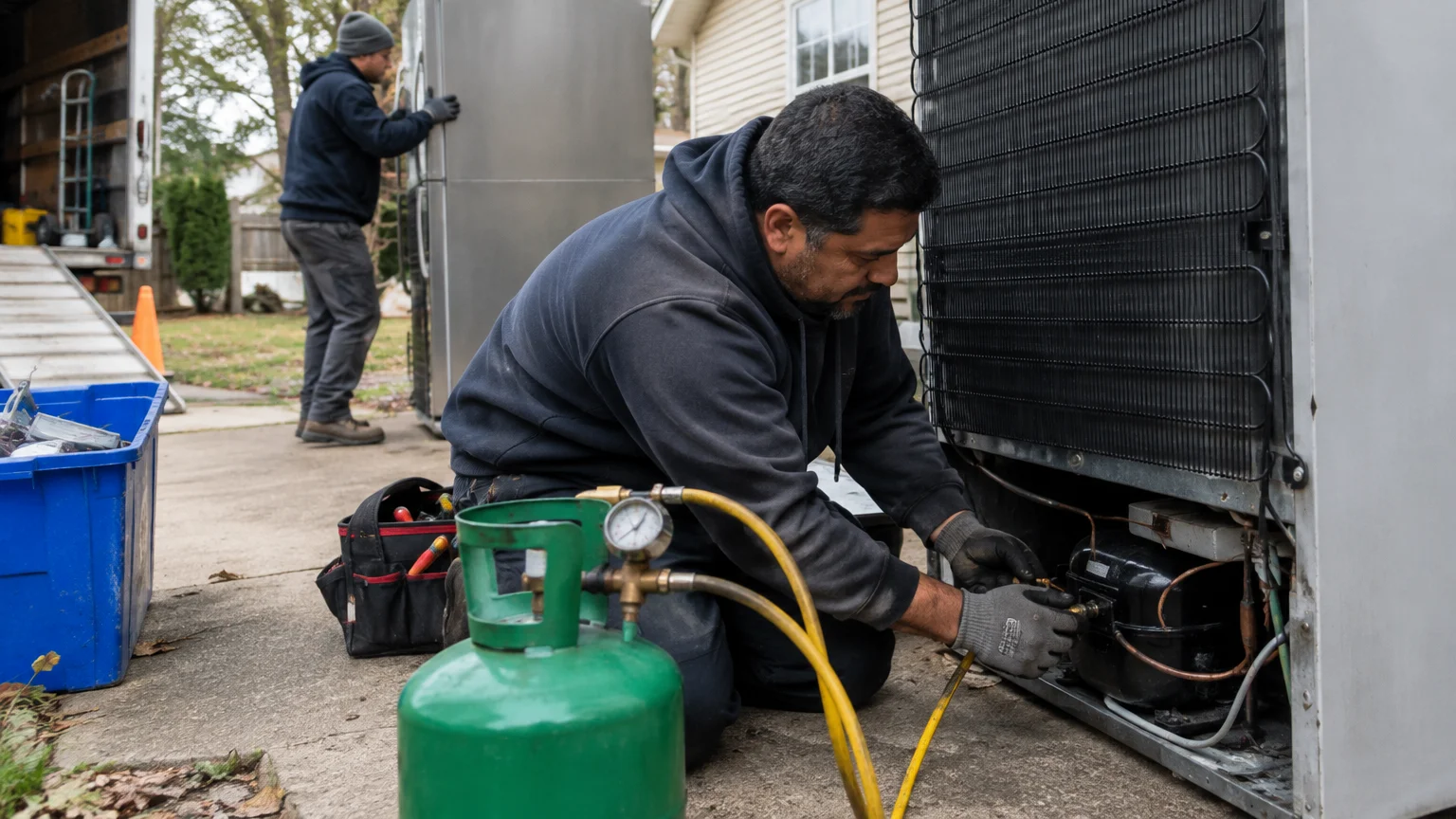
A trained appliance technician, recycling facility, or properly equipped removal company can recover refrigerant. The worker uses a recovery machine and an approved container. This removes the fluid without releasing it into the air. The recovered material then follows the handler's recycling or disposal process.
Homeowners do not need to recover refrigerant themselves. Safe tasks include removing food, wiping spills, and checking the model label. Do not connect hoses or remove sealed-system parts without training. If the unit came from a rental, office, or property cleanout, confirm who has permission to release it.
Can you put a refrigerator out for regular trash pickup?
Usually, a refrigerator cannot go with ordinary household trash without special instructions. Many waste providers require a separate appliance pickup or drop-off appointment. Some transfer stations and recycling centers accept refrigerators only after confirming that refrigerant will be recovered. Local rules control the safe collection method.
Why do refrigerators need preparation before collection?
A refrigerator is large, heavy, and hard to move through a home. It can damage floors, walls, door frames, and stairs. Doors can swing open while the unit is being moved. Preparation gives the collection team a clear path and lowers the risk of injury or property damage.
Remove food before placing the appliance near an exit. Secure or remove shelves and drawers. Wrap loose glass and keep it separate. Keep the refrigerator upright when possible, with the power cord secured against the cabinet.
What should homeowners check in local disposal rules?
Ask the local waste authority or recycling center if it accepts refrigerators. Ask whether pickup must be scheduled and whether doors must come off. Also ask if the facility recovers refrigerant. Check rules for freezers, ice makers, wine coolers, and commercial refrigerators because requirements may differ.
A property owner may need written approval before removing an appliance from a rental or managed building. A business may also need a record of where equipment went. These checks help with office cleanouts, rental turnovers, and property work. A local removal provider can help plan the next step without asking you to handle sealed parts.
How should you prepare a refrigerator for removal?
Safe preparation starts with emptying, cleaning, and unplugging the refrigerator. Homeowners can usually handle these basic tasks themselves. Leave refrigerant recovery, dismantling, and heavy lifting to trained workers. A simple plan makes pickup safer for everyone.
What should you do with food, shelves, and doors?
Remove all food, ice, water, and personal items. Wipe up liquid so the floor stays dry. Take out removable shelves and drawers if they lift out safely. Wrap glass parts and mark them clearly so they are not mistaken for general trash.
Tape or strap loose parts inside the cabinet only when they cannot break during movement. Do not tape doors shut in a way that blocks safe handling. Keep children and pets away from the work area. If the refrigerator is in a rental, photograph its condition before pickup.
How can you make refrigerator pickup safer?
Clear a wide path from the appliance to the exit. Move rugs, small furniture, boxes, and other trip hazards. Protect corners and finished floors when needed. Check stairs, gates, elevators, and parking areas before the collection team arrives.
Do not move a large refrigerator alone. Do not tilt it across stairs or drag it over flooring. A trained crew has the tools and people needed for heavy appliance removal. Littleton Junk Removal serves Littleton and can review access concerns before scheduling a collection. This helps when the unit sits in a basement, garage, tight kitchen, or upper-floor space.
What are the most responsible ways to dispose of an old refrigerator?
The best choice depends on the refrigerator's condition, age, safety, and local rules. Reuse may fit a clean working unit. Recycling is often better for a broken or outdated appliance. Proper removal keeps both choices open until the unit is checked.
When is refrigerator donation or reuse appropriate?
Donation or reuse may work when the refrigerator cools well, has no unsafe damage, and meets the receiving group's rules. The unit should be clean and free of strong odors. A charity, community group, appliance reseller, or reuse center may have its own age and condition limits.
Do not pass on a working refrigerator with exposed wires, a damaged cord, a cracked cabinet, or a leaking cooling system. Describe known problems honestly. Reuse is responsible only when the next user receives a safe and useful appliance.
How does appliance recycling work?
A recycling facility first receives and identifies the refrigerator. A qualified worker recovers the refrigerant and handles compressor oil. The appliance is then taken apart or processed so steel, aluminum, copper, plastic, glass, and other materials can be separated.
Some materials may go to different processors. The exact path depends on the facility and its equipment. Look for a provider that accepts the whole refrigerator and explains its recycling process. Appliance recycling may also cover freezers, washers, dryers, stoves, and dishwashers, though each item has different safety needs.
How are refrigerators handled by a professional removal service?
A professional removal service usually reviews the appliance, access route, and collection needs before moving it. The crew protects nearby surfaces, loads the unit with proper tools, and takes it to an approved destination. A refrigerator should not be treated like ordinary household junk.
What happens during refrigerator pickup?
The crew may confirm that the refrigerator is empty and disconnected. They may check stairs, doorways, elevators, and loading areas. Workers then move the appliance with straps, ramps, dollies, or other suitable tools. They secure it during transport so it does not shift or damage other items.
Tell the crew about narrow turns, weak flooring, pets, and other concerns. They may also ask whether the unit came from a home, office, rental, or renovation. Clear information helps the service choose a safe removal plan for residential or commercial work.
How are refrigerants, metals, plastics, and insulation processed?
The refrigerator goes to a facility that can manage its materials. Refrigerant is recovered before the unit is crushed or shredded. The compressor and oil are handled separately. Metal, plastic, wiring, glass, and insulation follow different recycling or disposal paths.
Not every part can be recycled in the same way. Some materials need special processing, while others may go to a permitted waste facility. Responsible providers do not claim that every part becomes a new product. They focus on safe recovery, proper sorting, and a lawful final destination.
How much does responsible refrigerator disposal cost?
The final cost depends on the work involved, not just the refrigerator. Access, weight, stairs, distance, urgency, condition, and the number of items can change the job. A ground-level pickup is usually less involved than removal from a tight basement or busy commercial site. The final cost should be confirmed on a quote.
What factors influence the cost of refrigerator removal?
The crew may need more time and tools when the path is narrow or the unit is built in. Extra labor may be needed for stairs, long carries, elevators, or difficult parking. A refrigerator mixed with washers, dryers, stoves, furniture, or other junk may need a larger load plan.
Recycling and refrigerant handling also affect the work process. Local rules can change which facilities accept the unit. Ask what the service includes and whether the provider handles the appliance from removal through its final destination. A clear quote helps property owners compare options without guessing.
How does refrigerator disposal compare with other appliance removal?
A refrigerator often needs more care than a small appliance because it has a sealed cooling system. A washer may be heavy and hold leftover water. A dryer can contain lint and wiring. A stove may have gas connections or heavy glass. A dishwasher can be fixed tightly under a counter.
The safest choice depends on the appliance and its condition. Homeowners can often clean, empty, and disconnect simple items when they know the steps. Gas lines, sealed systems, hardwired equipment, and heavy lifting need qualified help. Littleton Junk Removal can help Littleton homeowners choose a suitable removal option for the property and appliance.
Frequently Asked Questions
Can a homeowner take an old refrigerator to a landfill?
Not always. Many landfills and transfer stations have special refrigerator rules because the units may contain refrigerant. Call first and ask about accepted appliances, preparation, and drop-off steps. A qualified removal provider may be easier when the unit is heavy or hard to transport.
Should refrigerator doors be removed before disposal?
Only remove a door when local rules or the receiving facility require it, and only when the work is safe. An unsecured door can be dangerous for children and animals. In many cases, a trained removal crew can manage the appliance without asking the homeowner to dismantle it.
Can an old freezer be recycled with a refrigerator?
Often, a freezer follows a similar recycling process. It may contain refrigerant, oil, metal, plastic, and insulation. Confirm acceptance with the facility before transport. Do not puncture or crush the unit at home. Its condition and refrigerant type may affect the handling steps.
Is it safe to leave a refrigerator outside for pickup?
It is safer to keep the refrigerator in a dry, secure place until collection. If it must stay outside, protect it from children, animals, rain, and tampering. Doors should not create an entrapment risk. The collection provider can explain the safest placement for the property.
Does responsible disposal apply to commercial refrigerators?
Yes. Commercial refrigerators may be larger, heavier, and harder to move. They may also contain different parts or refrigerants. Restaurants, offices, stores, and property managers should check facility rules and arrange trained handling. A professional service can review access, equipment size, and recycling needs before pickup.
Key takeaways
- Keep refrigerators out of regular trash until local rules are checked.
- Never puncture coils or release refrigerant at home.
- Empty, unplug, and clear the path before collection.
- Donate working units only when they are safe and accepted.
- Choose a provider that explains recovery, recycling, and final handling.
Responsible refrigerator disposal protects people, property, and the environment. Homeowners can manage simple preparation, but sealed systems and heavy movement need trained help. Contact us today to arrange responsible refrigerator removal with Littleton Junk Removal.